
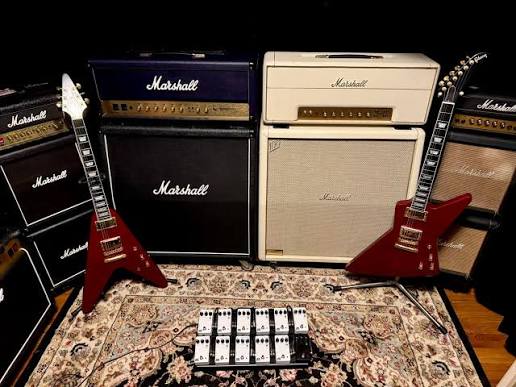
A deathcore amp, by contrast, needs to deliver those same qualities at a much higher level of precision. Fast, syncopated rhythms played on down-tuned guitars require an amplifier that tracks each note clearly without smearing. The low end has to be heavy without being loose. The gain has to be saturated without creating a wall of indistinct noise.
Finding the right amplifier for deathcore is one of the most consequential decisions a heavy guitarist can make. The genre sits at one of the most technically demanding intersections of extreme metal—combining the speed and precision of death metal with the rhythmic devastation of metalcore. The amplifier has to keep up with all of it while delivering a tone that is simultaneously brutal, articulate, and controlled.
This article explores what modern deathcore guitarists look for in amplification, how different amp designs serve different playing needs, and what features separate a genuinely effective heavy amp from one that simply looks the part.
What Separates a Modern Deathcore Amp From a Standard Metal Amp?
The distinction between a standard metal amplifier and one purpose-built for deathcore is subtle but meaningful. Standard high-gain amplifiers—the kind associated with classic heavy metal—tend to prioritize sustain, warmth, and a slightly looser low end. These qualities work well for slower, more groove-oriented styles.
Modern amp designers have responded to this need by refining preamp circuits, improving power amp responsiveness, and building more sophisticated EQ architectures into their high-gain designs.
How Do Modern Amp Designs Handle Down-Tuned Guitar Frequencies?
Down-tuning is fundamental to deathcore. Guitars tuned to drop A, drop G, or even lower require amplifiers that can manage extreme low-frequency content without losing clarity or becoming muddy.
Traditional amplifier designs weren’t built with this requirement in mind. Their EQ curves and speaker interaction were optimized for standard tuning ranges. Modern high-gain amplifiers designed for extreme music account for these lower frequencies throughout the circuit design.
Resonance controls, extended bass response, and carefully voiced preamp stages all contribute to how an amp handles sub-bass frequencies. The goal is to allow the guitar’s low strings to sound full and powerful without overwhelming the upper mid-range frequencies where note clarity and pick attack live.
Cabinet choice becomes equally important here. A poorly matched cabinet will allow low-frequency content to become boomy and uncontrolled regardless of how well the amplifier itself manages those frequencies.
What Are the Advantages of a Multi-Channel Amp for Deathcore?
Multi-channel amplifiers give deathcore players the ability to switch between tonal characteristics within a single performance. This capability is more useful in deathcore than it might first appear.
While the genre is most commonly associated with sustained high-gain aggression, many modern deathcore arrangements include dynamic contrasts—atmospheric sections, melodic passages, and clean interludes that give the heavy parts greater impact by comparison. A single-channel high-gain amp handles the heavy sections with authority but falls short in these dynamic moments.
A well-designed multi-channel amp provides a clean or crunch channel alongside the high-gain lead channel, allowing players to cover the full tonal range of a modern deathcore performance from a single unit. Channel switching via footswitch keeps transitions seamless during live performances.
How Important Is Output Wattage for a Deathcore Guitarist?
Wattage determines how much clean headroom an amplifier has before it begins to naturally distort. In a genre that relies on preamp-generated gain rather than output stage breakup, wattage serves a different function than it does in classic rock or blues contexts.
For deathcore, higher wattage provides two key benefits. First, it ensures the power amp section remains stable and controlled even when the preamp section is pushed hard. An underpowered amp driving a large cabinet can sound thin, strained, and dynamically compressed in a way that undermines rather than enhances aggressive playing.
Second, higher wattage provides practical volume capacity for live performance. Deathcore bands typically perform in environments where on-stage volume is significant. An amplifier with substantial wattage handles these demands without struggling or compressing at high volumes.
For home practice and studio recording, lower wattage options and attenuators make high-gain tones accessible without requiring extreme volume levels.
What Makes a Preamp Circuit Effective for Aggressive Playing Styles?
The preamp circuit is responsible for generating, shaping, and controlling gain before it reaches the power amp section. For deathcore, the preamp is arguably the most important part of the entire amplifier.
Effective preamp designs for aggressive playing feature cascaded gain stages that saturate progressively rather than abruptly. This progressive saturation creates a smoother, more controllable distortion character that retains articulation under fast, complex playing conditions.
Voicing switches and channel-specific EQ controls within the preamp section allow players to shape their tone with precision. Some modern amplifiers include mid-shift switches that alter the frequency center of the mid-range control, giving players quick access to distinctly different tonal characters within the same channel.
Noise is an inherent consequence of high preamp gain. Well-designed circuits minimize noise floor while maintaining harmonic richness in the distortion character. Players often supplement amp circuitry with external noise management, but a well-engineered preamp keeps this requirement to a minimum.
How Do Effects Loops Enhance a Deathcore Rig?
A series effects loop, positioned between the preamp and power amp sections of an amplifier, allows players to insert time-based effects—delay, reverb, and modulation—without sending those effects through the high-gain preamp. This keeps the effects signal clean and prevents the preamp’s distortion from interfering with their character.
For deathcore guitarists, the effects loop is most commonly used for reverb and delay in atmospheric or ambient sections. Running these effects before the preamp rather than through the loop results in a washy, indistinct quality that rarely serves the genre well.
Some amplifiers offer parallel effects loops, which blend the processed signal with the dry signal at an adjustable ratio. This gives players the ability to incorporate effects subtly without losing the directness and punch of the dry amp signal.
What Should a Deathcore Guitarist Consider When Testing an Amp?
Testing an amplifier before committing to it reveals characteristics that specifications alone don’t communicate. A few focused areas of evaluation make the testing process more effective.
Start by assessing low-end response with the guitar in its actual playing tuning. The bottom end should feel tight and defined, not loose or boomy. Then evaluate how the amp responds to fast rhythm playing. Individual notes should remain distinguishable even at high speeds and high gain levels.
Test channel switching if the amp offers multiple channels. Transitions should be clean and immediate, without audio artifacts or volume inconsistencies between channels. Assess noise levels during pauses in playing. Some noise is expected at high gain settings, but excessive noise suggests circuit quality issues that a noise gate won’t fully resolve.
Finally, test the amp at the volume levels you’ll actually use it at. Tube amplifiers especially respond differently at bedroom volume versus stage volume, and the tone that sounds good at low levels may shift considerably once the volume increases.
Frequently Asked Questions About Modern Deathcore Amp Options
What amp features matter most for deathcore rhythm guitar?
Tight low-end response, a high-gain preamp with clear articulation, and a responsive noise gate are the most important features for rhythm guitar. Channel switching and a series effects loop add practical versatility.
How does cabinet impedance affect amp performance for heavy music?
Mismatched impedance between the amp and cabinet reduces efficiency and can affect tone and reliability. Matching impedance ensures the power amp section operates as designed, preserving both tone quality and equipment longevity.
Do deathcore guitarists typically run two amps simultaneously?
Running dual amplifiers is a technique used by some professional players to blend tonal characters—often combining a tight, aggressive amp with a slightly warmer or darker unit for added depth. It’s practical in studio settings but less common in live performance due to the logistical complexity involved.
How does speaker break-in affect heavy guitar tone?
New speakers often sound stiffer and less resonant than speakers that have had time to break in. Many players find that speaker response opens up and becomes more natural after extended use, particularly in the low-frequency range critical for deathcore.
Choosing an Amp That Grows With Your Playing
The amplifier a guitarist chooses shapes not only their current sound but their development as a player. A well-matched amp rewards precision and punishes sloppiness—qualities that, over time, push deathcore guitarists to refine their technique.
Modern amplifier options for heavy music are more sophisticated and varied than at any previous point in the instrument’s history. The combination of refined analog engineering, high-quality component sourcing, and a deeper understanding of what heavy music demands has produced a generation of amplifiers genuinely capable of meeting deathcore’s requirements.
Take the time to understand what you need from an amp, test your options thoroughly, and invest in equipment that serves your playing at the level it deserves